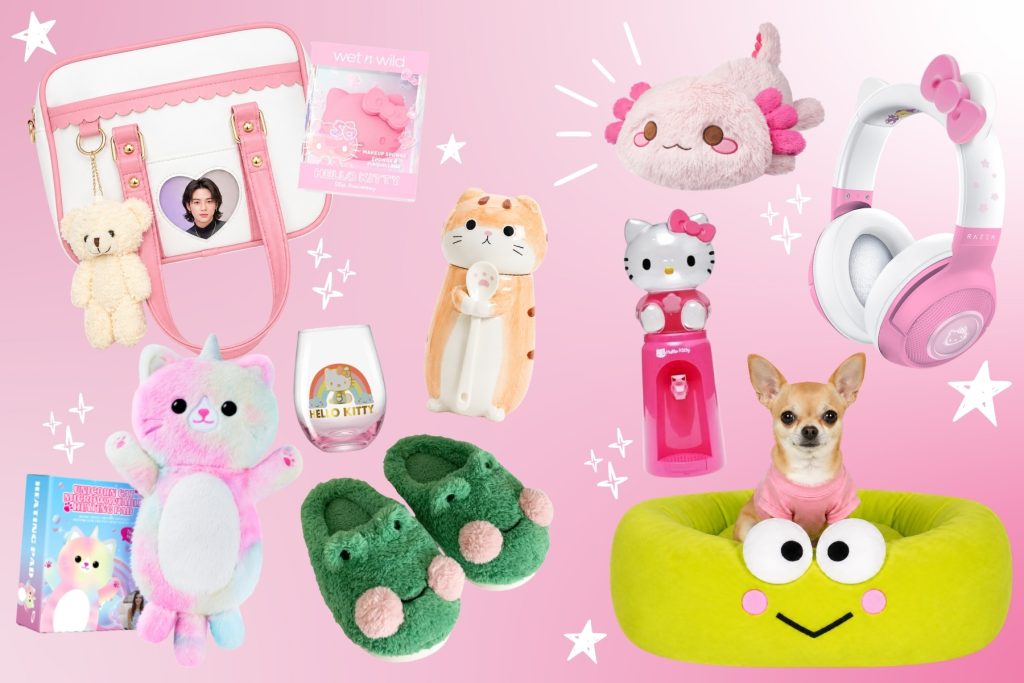
Kawaii (かわいい) means cute. That’s the dictionary version, anyway. In practice the word carries a lot more freight than “cute” does in English. It points at things that are small and soft and a little helpless, the kind of thing you want to scoop up and look after. A schoolgirl slang term in the 1970s turned into one of Japan’s largest cultural exports, and if you’ve ever bought a Hello Kitty pouch or a Pikachu keychain, you were buying kawaii whether you called it that or not.
This guide walks through where kawaii culture came from, the companies that turned it into money, and why it refuses to go away.
What kawaii actually means
Start with the look, because that’s what most people mean by kawaii: round faces, oversized eyes, pastel colors, a general air of harmlessness. Those are real markers. But the word runs deeper than the aesthetic, and the history is a little strange.
It began with handwriting. In the 1970s Japanese teenage girls started writing in a rounded, bubbly style full of hearts and stars and tiny doodles. Schools hated it and tried to ban it. The girls wrote that way anyway, and the style leaked out of their notebooks into magazines and advertising and eventually the whole visual language of Japanese pop.
Go back further and it gets odd. The older root of the word meant something closer to pitiable, even pathetic. You can still feel that thread in a lot of kawaii design, which leans hard on vulnerability. The big eyes, the small body, the slightly lost expression. Psychologist Hiroshi Nittono has spent years studying this, and his work suggests cute things grab our attention and make us gentler, more careful, more willing to slow down. Which is a fairly practical reason a company might want its mascot to look a bit helpless.
A few qualities show up again and again in kawaii design:
- Childlike proportions, with large eyes and round faces
- Soft pastel colors and sweet, gentle motifs
- Small scale, whether a charm, a plush, or a sticker
- An overall look of harmlessness that invites you to care
Sanrio, Hello Kitty, and the business of cute
No company did more with kawaii than Sanrio. The whole business runs on characters designed to sell friendship and small daily comforts, not any one product. You don’t buy a Sanrio thing because you need it. You buy it because the little face on it makes you feel something.
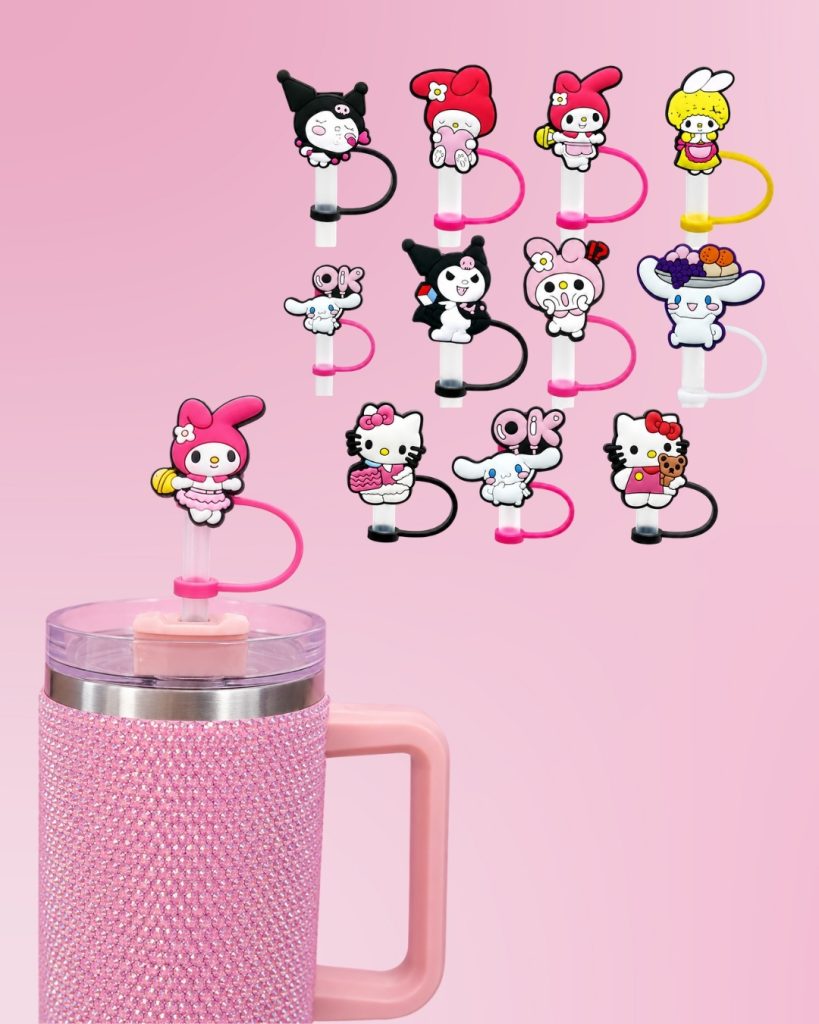
showed up in 1974 and became the mascot the entire category gets measured against. She famously has no mouth. Sanrio’s line is that this lets you read your own mood onto her, and cynical or not, it worked: the character still brings in something like $4 billion a year in merchandise. Her Sanrio siblings each have their own fandoms too, sometimes fierce ones. Kuromi people and My Melody people do not always get along.
Some of the kawaii characters you’ll run into most:
- Hello Kitty, the round-faced Sanrio flagship
- My Melody, a shy rabbit in a pink hood
- Pikachu, the electric mascot from Pokémon
- Kumamon, a regional bear mascot who outgrew his prefecture
Here’s the part people miss. By the 2000s, Sanrio’s core buyers weren’t kids. They were adult women. Cute stopped being a children’s thing somewhere along the way, and the market quietly reorganized itself around grown women who never saw a reason to give it up.
Kawaii in anime, manga, and pop culture
Manga and anime did the heavy lifting of getting kawaii out of Japan. That instantly recognizable anime face, the enormous eyes and tiny nose, is kawaii aesthetics doing their job. Sailor Moon is a good example of the trick: bows and pastels and transformation sequences, wrapped around actual fights, so the cuteness never reads as soft in a bad way.
Anime fans have a companion word worth knowing: moe. It’s the warm, protective ache you feel toward a character, the urge to defend a fictional person from harm. Moe and kawaii aren’t the same thing, but designers use kawaii motifs specifically to switch moe on. That’s the whole game with a lot of character design.
Pokémon took this and turned it into a machine. Pikachu is about as pure as kawaii gets, a round yellow thing with red cheeks, and it became one of the most recognized characters on the planet. Japanese popular culture keeps running the same play: bolt a cute mascot onto anything, a bank, a police department, an entire prefecture, and watch people warm up to it.
Harajuku and the fashion of kawaii
Harajuku in Tokyo is where kawaii became clothes. A couple of subcultures are worth singling out.
Lolita fashion pulls from Victorian and Rococo dress: knee-length skirts puffed out with petticoats, lace, ruffles, ribbons, the odd bracelet or necklace to finish it. Doll-like is the word. It splits into sweeter pastel versions and darker gothic ones, and the people who wear it take the rules seriously.
Decora goes the opposite direction and just piles everything on. Layers of plastic clips, bright colors, so many tiny accessories that you almost lose the person underneath. The designer Sebastian Masuda pushed decora out to a global audience through his art and his work in music. New hybrid styles surface in Harajuku constantly, which is half the reason people go.
Quick comparison of the two:
| Style | Silhouette | Palette | Signature detail |
|---|---|---|---|
| Lolita | Full, structured skirt | Pastel or dark | Lace and ruffles |
| Decora | Loose, layered | Rainbow, bright | Stacked clips and charms |
Why kawaii keeps spreading
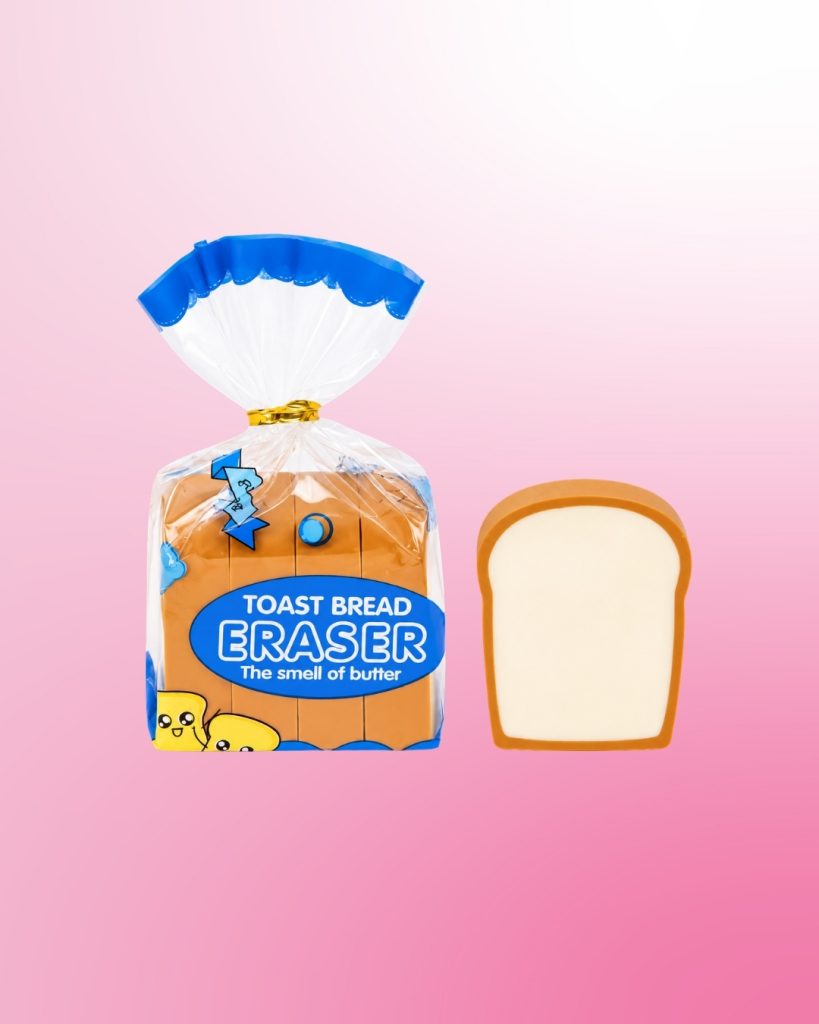
I think kawaii lasts because it does something useful. A strawberry-shaped eraser or a puppy-faced charm is a tiny mood fix you can carry around, and that’s not nothing when your day is going badly. Nittono’s research backs this up: cuteness measurably changes how we feel and where our attention goes. Cheap comfort, basically, and people will always buy cheap comfort.
The other reason is that kawaii bends. It has absorbed new characters, new fashion, new fandoms for fifty years without losing the thing at its center, and it never cared much who was allowed in. Somewhere in there it stopped being a niche of Japanese culture and became a language the rest of the world speaks too. People keep predicting kawaii culture is a fad. They’ve been wrong the whole time.